
How to improve: play young players
The winning math of the Thunder and Spurs

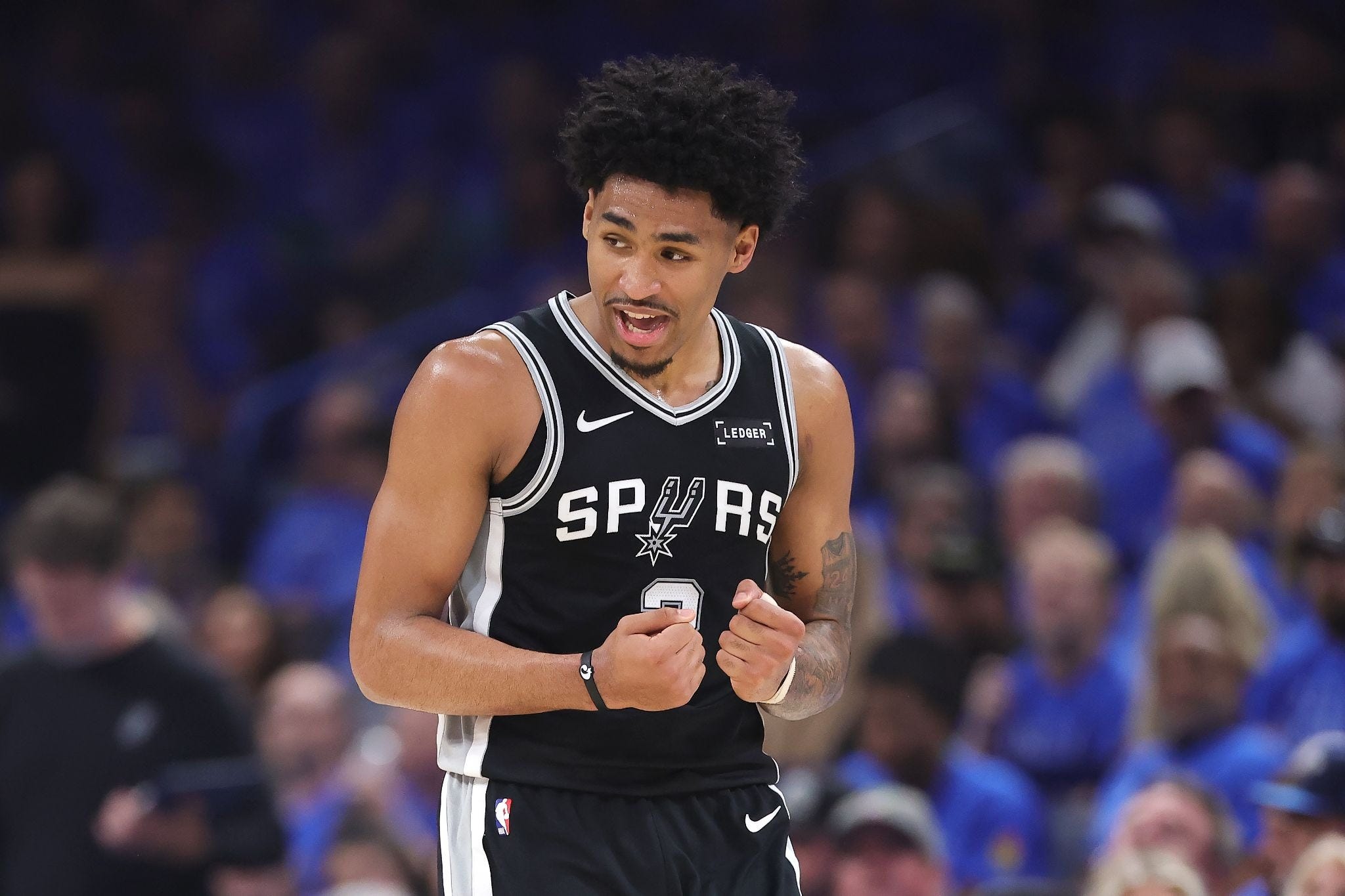
David Thorpe said the other day that on a lot of teams, Ajay Mitchell would be in the G-League. Instead, the Thunder played him a ton, and started him in the absence of the injured Jalen Williams for six playoff games, which were all wins. By the end of the second round, the league’s actual MVP, Shai Gilgeous-Alexander, said the 23-year-old Belgian second-rounder might have been the most valuable player in the series.
Score one for youth.
Meanwhile, in the Thunder’s next game, they played against a Spurs team that made Mitchell look old. Owing to an injured De’Aaron Fox, the Spurs started a lineup with an average age of 22 years and 345 days. The youngest of those was Dylan Harper, a rookie who just turned 20 in March. Harper played 47 minutes, and had 24 points, seven steals, and six assists, with just one turnover. The Spurs outscored the Thunder by 14 when Harper was in the game.
This ignites an age-old debate about how teams get better: by getting better players, or by getting younger players?
Last week, we dug into the idea that draft picks seldom work out as planned. Any way you slice it, a tiny sliver of drafted players—by my analysis, six percent—go on to become excellent players for their first team.
But that’s not to say the evidence suggests, therefore, that highly paid veterans are the answer instead.

There’s a lot going on behind this list, but at its core:
By CBA rules, you have to play at least seven years to be eligible for the NBA’s biggest contracts.
By the time you’ve played seven high-scoring years of NBA basketball, you’ve played long minutes and odds are your body is pretty beat up.
Very commonly players’ production is in decline by the time they get a supermax deal.
Teams with huge chunks of their payroll going to players in decline are seldom the league’s best teams.
So if the most reliable strategy is not to bet on this year’s lottery pick sticking around to thrive, and it’s not to import a high-priced veteran … what is?
One right answer appears to be: get lots of young players, and play them.
Here are the ten teams that played young players the most minutes from 2022-2026.
And here are the ten teams that were most committed to veterans, sometimes called “win now.”
