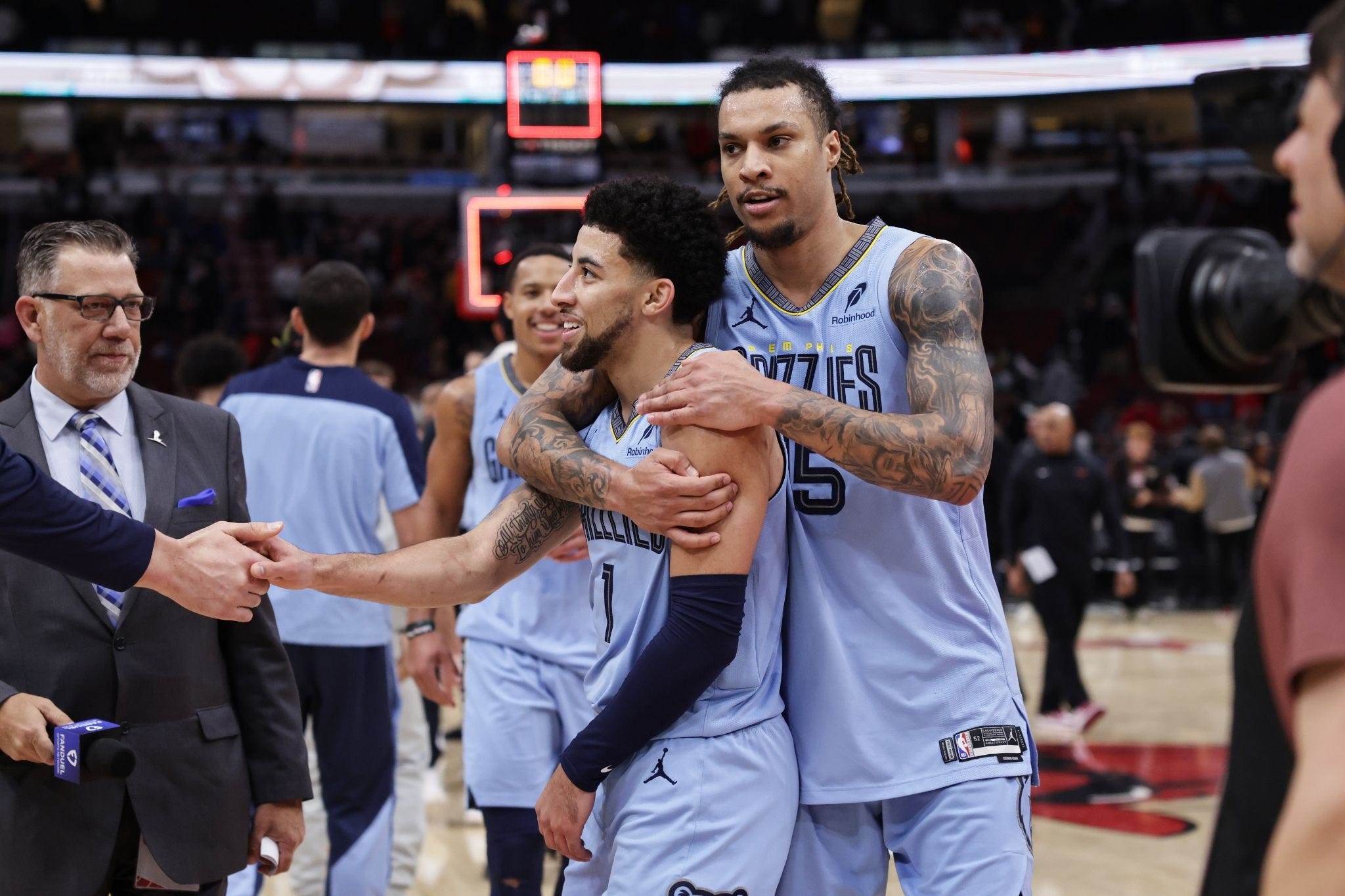
I am heartbroken
Brandon Clarke should not have died

My phone chimed while I was watching NBA combine agility drills. I saw it was an agent; I knew he’d be complaining how silly most of this combine stuff is.
Instead, it was a hammer: Brandon Clarke had died at the age of 29.
I never met Brandon, but I’ve been hearing about him for years from various teammates and coaches. People loved Brandon Clarke.
I stopped watching the combine and started calling. I spoke to some of his Memphis Grizzlies teammates. I spoke to competitors. I spoke to Gonzaga alumni, former teammates, and others who crossed paths with him.
Everyone sounded lifeless, shocked, too sad for words. One player said Brandon brought big-volume joy to the gym every day, even when Brandon was injured. Another young player remembered a hard time when he was not getting meaningful playing time: “As I struggled to get rotation minutes, Brandon was the most giving teammate with his words, telling me how well I’m doing in practice and that my time would come.” Clarke could have so easily been bitter because of the injuries that caused him to miss more than two thirds of Grizzlies games over the last three seasons. But Brandon had a special integrity that mattered to his teammates.
One piece of wonderful news: Grizzlies players told me they had already heard from their bosses, checking in to make sure they were OK. Perfect.
Because NBA players, despite their size and income, get broken hearts. They get down. And it can be corrosive. I’ve lost count of the NBA players who have openly discussed their struggles with anxiety and depression in the media; behind-the-scenes I assure you there are many more.
Health can be a special trigger. Some players, and his teammates all say Brandon was like this, have very little in their lives outside of basketball. So when you can’t play, often because you’re in pain, it can be easy to feel rudderless. Grant Hill was one of the most celebrated players of all time, and even he has a story of feeling adrift, prescribed opioids, and unsure what the future holds.
A few weeks ago my 5-4 daughter called with a worry about some health issue. Yesterday, I talked to one of the best players in the world, almost seven feet tall, worried about a swollen ankle. One is still on my Uber family plan; the other earns many tens of millions of dollars. But they’re both worried about the same exact thing: not feeling OK.
Both, it turns out, are fine. Phew. But when you get tougher news, like Brandon did, it can be a test. Ideally you have a good network of people who love you, who accept you might be vulnerable, and can help. It’s a huge part of the connective tissue of thriving societies.
Which leads me to Brandon Clarke. It could take weeks to learn what really happened. What’s certain is that the research shows it’s nice to be able to pay your bills, but it does not solve all of your problems. Those problems dissipate, others surface. Some wildly successful stars, like DeMar DeRozan—one of the all-time great NBA scorers—and Kevin Love—one of the all-time great NBA rebounders—both very wealthy men, both surrounded by not just fans, but by people who love and adore them, have openly spoken about anxiety. Dealing with anxiety is a common part of my work with NBA clientele. They’re human beings like everybody else.
One multiple-time All-Star told me he had concerns that Brandon’s injuries led him to be depressed. How could it not, at least to some level? Another wondered “is it possible he’d been told he was not going to be with the team next year?” Someone I know, an expert in the medical field, suggested what agents and other NBA-connected people wrote or said to me; “assuming he had used pain killers to deal with all these surgeries and recoveries, was he addicted?”
It’s the story of the American opioid epidemic (which has deep connections to sports) and it can be hell. More than one friend or child of a friend got addicted through no fault of their own, following surgery. One didn’t make it.
It is not a character flaw to get addicted, nor to suffer from depression.
In my experience, things get emotionally delicate for almost everyone whose waking life, year after year, is spent rehabbing an injury, while mere steps away your teammates are living their dreams. It’s very easy to leave the NBA.
Today’s a very, very sad time for anyone who associates with the NBA.
These men who make the NBA do so against incredible odds. There has been so much battling along the way. In many ways they’re heroic, and that’s a story we understand and see on our screen in these playoffs. But what’s harder for us to discuss is the degree to which that struggle can leave people feeling shipwrecked. People on our TVs, even in these playoffs, are carrying massive burdens, and we don’t often have the language to support them.
Perhaps the next time you hear a television anchor, former player, or a journalist talk ill of players who are suffering from injuries and missing games, you will think of Brandon. The next time a player rests so that they can try to prevent an injury, remember those stakes are incredibly high for the player.
Time will tell if there’s anything the league, the coaching and executive staff, or people who work outside the organizations like me, can do to help people like Brandon. Mostly I feel we see the opposite. Jayson Tatum felt compelled to return this year and got hurt again. Tyrese Haliburton risked his Achilles to win a title, and lost a season while having to deal with long Covid and shingles. Ben Simmons was made into a joke, a joke with a bad back.
Very often those beat-up players are ridiculed. That has to stop.
I don’t know what happened to Brandon. Perhaps he was overburdened by the fizzling of his career. Perhaps he was wracked with pain. Perhaps it was related to his recent arrest in Arkansas. Perhaps it was just tragically bad luck. Perhaps it was all of the above.
The right question in NBA circles is: How can we make it so that it never happens again?
This is what I told the players I called: “You are not an ATM Machine to me, to your agents, to your friends and family. I hope to be close to you long after we both retire. You don’t have to tell me everything, but you can tell me anything that makes you feel anxious, sad, confused, or worse. Just know that.” It doesn’t mean they will, or that it will matter, but those conversations are the beginning of something better.
Thank you for reading TrueHoop!


Great Stuff! (btw, pun intended), love the analogy to your daughter, anxiety hits hard at everyone. I was a practicing attorney making hundreds of thousands dollars a year, traveling the world, happily married, 2 great kids, a weekend warrior athlete when at 45 I was diagnosed with aggressive cancer. I took the 1st blow in stride but when it recurred and I had a kidney removed I got depressed, all I could see was what I was losing (NOT what I still had) and tried to cure my depression with food. I'm 15 years past that and currently in great health BUT it was a struggle and after reading your piece I wish I had you (or someone like you) helping me rebound (and yes, pun again intended!) Keep doing what you do, not just the reporting on the league but making the NBA's athletes 3 dimensional
Thanks for a really great piece! I remember watching Brandon at Gonzaga and with Memphis. His physical abilities were incredible! Such a sad story.
I also appreciate your insights into the life that is pro sports. I think it's extremely sad for fans to not understand how difficult it really is to even get to this level, and how talented and hard working you have to be to even be a two-way player in this league. Gambling, particularly prop-bets, have made these players lives even harder. The abuse they seem to take for people not winning their bets is simply amazing to me--something I'll never understand.
Sad day!