
Glimpses of greatness
Watching AJ Dybantsa, Darryn Peterson, Cameron Boozer, and especially Caleb Wilson

I’ve been going to NBA summer leagues, in Boston, in Orlando, Salt Lake City, Long Beach, and then Vegas, since 2000. The sheer scale of the event, now, and the execution of all these games, the movement of fans, and the convention-style atmosphere is really extraordinary. It’s expertly run, like Disney World for basketball people.
But it has its oddities. A reality of 30 teams sharing two courts in one arena is a new challenge for players: not a lot of time to warm up before games. They certainly don’t get their regular pre-game routine that they’ll have pretty much the rest of their careers.
I often go watch players do their pre-game workout before NBA games, and they’re doing that workout 90 minutes or more before tip off. The latest I see a player get a full 15-minute warm-up would be a good 80 minutes before tip-off. I have players sometimes working out as early as 4:30 or 5 for a 7pm tip.
That gives you some indication of how much time they have to get their touches, get their shots, get their handle work in, and then they have the good 20-minute warm-up, give or take a few minutes, with their team, where they’re doing layup lines and shooting 3s and free throws and everything else. They’ve had an individual workout with a coach, and then at least a 20-minute warm-up with their team.
It’s impossible to give that to summer league teams with 30 teams on two courts. It’d be like expecting no lines for the popular rides at Disney. The math just won’t allow it.
So they spend a few minutes on the court, and then they play. That’s one reason I am not going to make any wild observations about what a player looks like based on shooting percentages. Lack of pre-game work on the playing court, plus a lack of time practicing with his teammates in the days before the league began, is simply not the same as we see in-season.
Memphis played Golden State in the Summer League Finals, both teams came to Vegas having played a few games in Utah and California. I don’t think it’s a coincidence that those teams played better. I can tell you that after one game, I spoke to one of the best young passers in the NBA. After his first game last week, he admitted he didn’t know half his teammates’ names. AJ Dybantsa made one of his eleven 3 point attempts. Caleb Wilson hit just six of his 18 free throw attempts and averaged over five turnovers a game. They deserve fair evaluations in real games this fall.
Still, I saw the top four guys in person for their games, and have opinions.
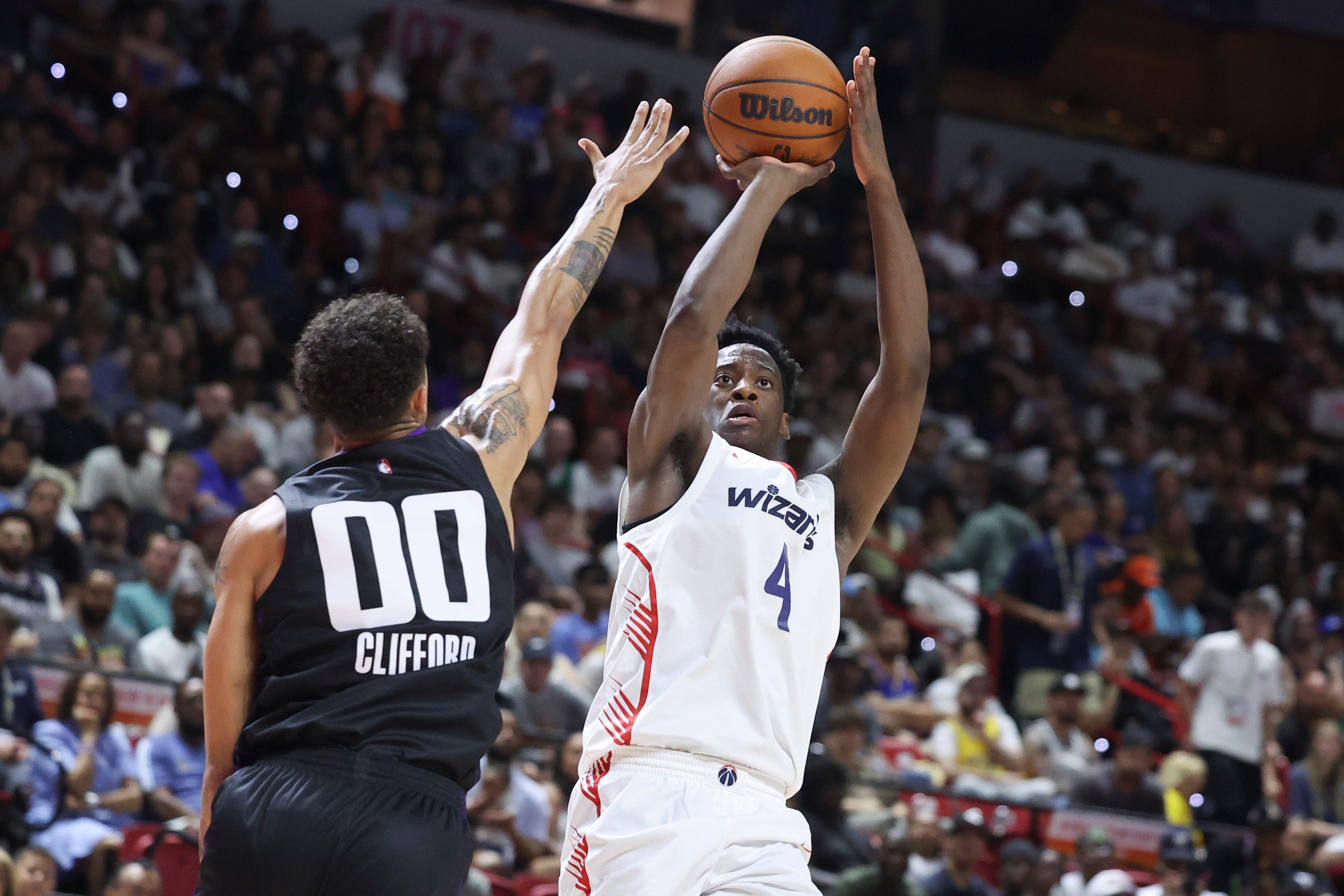
AJ Dybantsa
I just told you I’m not going to overreact to someone missing shots in summer league. And the fact that AJ was one of the worst shooters in the league for a couple of games isn’t my biggest concern. But …
Let’s start with the positives. AJ Dybantsa is an enormously skilled and large wing who has both the athletic ability, ball handling skills and feel to get by people and create good shots. He is a sometimes-willing passer, and we have every reason to believe that over time he’ll become a more willing passer if teams begin to load up on him more.
One of the challenges of evaluating summer league is that these teams have so little experience playing together. Another is the coaching.
Most teams’ summer league are run by men who have never been head coaches at any level. That doesn’t mean they don’t know what to do, but they lack the poise and to explain it in real time. One player told me he had to take the clipboard and draw up a play in a late game situation because his coach simply didn’t have a plan.
These new coaches are also dealing with players they’ve barely coached, who may or may not be able to execute what those coaches want, which is why sometimes coaches don’t change the game plan all night. They just keep doing what they’re doing during the course of the game, for simplicity. This was especially true that first weekend when everything was so new. (I thought in the league’s final game, Warriors vs. Grizzlies, there was more recognition of doing things differently, and an ability to do it, because they had played 10-plus games over nearly three weeks together.) Also, and importantly, these coaches are far down the pecking order of their teams regular season staff. The chances of them yanking a drafted player out of a game for a mistake, even when that would actually help the player, is basically nil.
AJ only played at the beginning of summer league, which probably helped his results. Summer teams are not geared to defending a talented predator wing like Dybantsa. He shot poorly and still averaged over 25 points per game on 16 shots per contest (for two games).
It will take years before we know if the Wizards drafted a future All-NBA level player. Everything about him suggests that it’s possible.
I don’t mean to sound pessimistic but I’m not sure it’ll happen without serious growth from the player and the franchise.
When I watch AJ play, I see too much LaMelo Ball, a focus on “me” more than “we.”
It’s understandable. That approach has made all of Dybantsa’s dreams come true. He has been on an incredible ride to the top. He has played a certain way, and even though it hasn’t helped him win high-school championships nor AAU titles, he’s still the number one pick, and he will always be known as the first pick of this draft. Mission accomplished!
We’ve seen this show before, where players are rewarded for their talent and their style. So why should they be more invested in winning? I’m not telling you that I think AJ doesn’t care about winning, or that I think he’s strictly a selfish player. I’m only suggesting that the part of his career where he puts winning first isn’t here yet. There has to be serious growth from him in that area.
I’ll contrast that with a player we’ll get to later in Cameron Boozer, who has major hurdles he has to get over in order to be a very good NBA player, but winning isn’t one of them! That is not to say that Cameron only took good shots. That is not true. But no one watching him, or anyone who has studied him for years, would suggest he is a “me” player over a “we” player.
I’m not going to give percentages on AJ’s chances of being an All-Star based on a couple of summer league games. I’ll save that for the season. I just don’t think it’s a sure thing. The future is in his control, and right now his team’s as well. There’s every reason to be optimistic, but to think there’s no chance he fails is a mistake. Four years ago, Benn Mathurin was the number six pick of a draft that has already produced four All-Stars, plus a key starter and proven scorer on an NBA Finalist. But for the moment Mathurin doesn’t have a job. The “we over me” debate looms large for his career, still. Dybantsa has more big-picture talent, to be sure, but the point remains.
To go one step further, Dybantsa should absolutely be a defensive stud. On that end of the court he should be able to defend, with some ease, small forwards and power forwards, and there’s even a world that allows him to play some small-ball five against certain opponents. That’s how talented he is. It remains to be seen if he grows in that area, and he has no excuse given the other talented offensive players he has in Washington to make progress this season. He does not have to be the only offensive guy on that team.
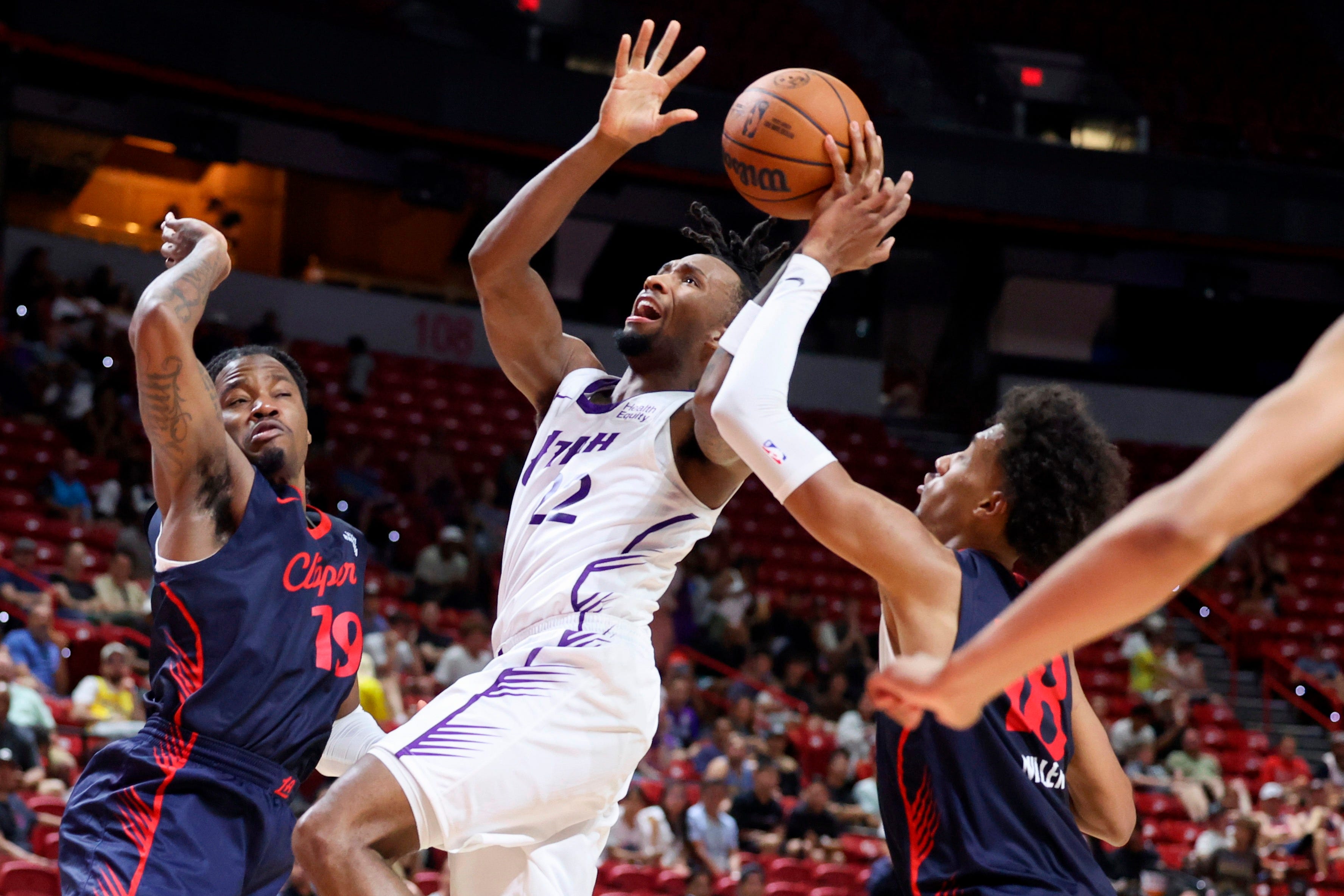
Darryn Peterson
The next pick, the Jazz’s Darryn Peterson, was both amazing and not so much.
